Sanctum is a supportive skill in Journeybound Idle, and it works differently from the ones that simply tick upward. You do not spend materials on it directly. You spend Grace — a budget of 10 that your shrine draws against continuously while it runs.
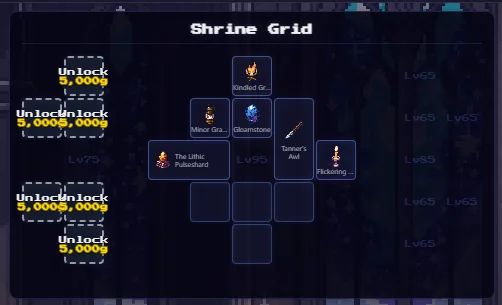
Almost everything about playing Sanctum well comes down to keeping that budget in the black.
Grace is a rate, not a stockpile
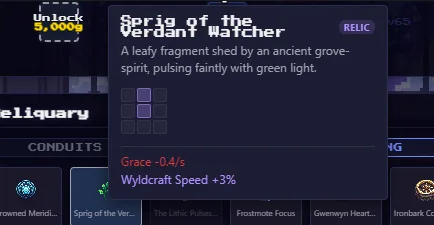
Your shrine holds relics, and most relics draw Grace the whole time they are active. What matters is not how much Grace you have banked but whether your net rate stays positive: the working floor is to stay above 0.1 per second.
Your total Grace sits in the top right corner of the screen. Watch it rather than the relic list, because the relic list will not tell you when you have overcommitted. When the number turns red, the shrine has failed.
Running the budget to zero is recoverable but slow. You wait for Grace to refill completely, then switch the shrine back on. Nothing is lost permanently, but the shrine does nothing for you in the meantime, which on an idle game is the actual cost.

Conduits pay in, everything else takes out
Relics come in five types: Conduit, Combat, Gathering, Production and Utility.
The split that matters is Conduit against all the rest. Conduits are the type that returns Grace — the Kindled Grace Conduit occupies a single space block and gives back +0.1 Grace per second. Everything else buys you something useful, a boost to a skill or to combat, and drains Grace to pay for it.
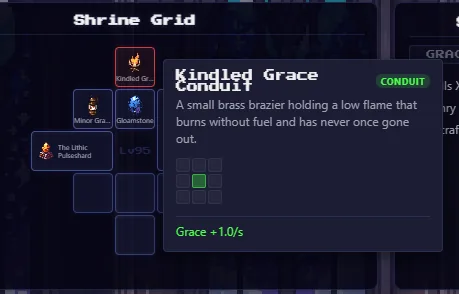
So a shrine is a balance sheet. Conduits fund it, the other four types spend it, and the difference is the rate you are watching. Adding a strong Production relic is only free if there is a Conduit somewhere paying for it.
Nothing above Conduit level 50 has been observed to change this — positive Grace has come only from Conduits that far in.
Getting relics
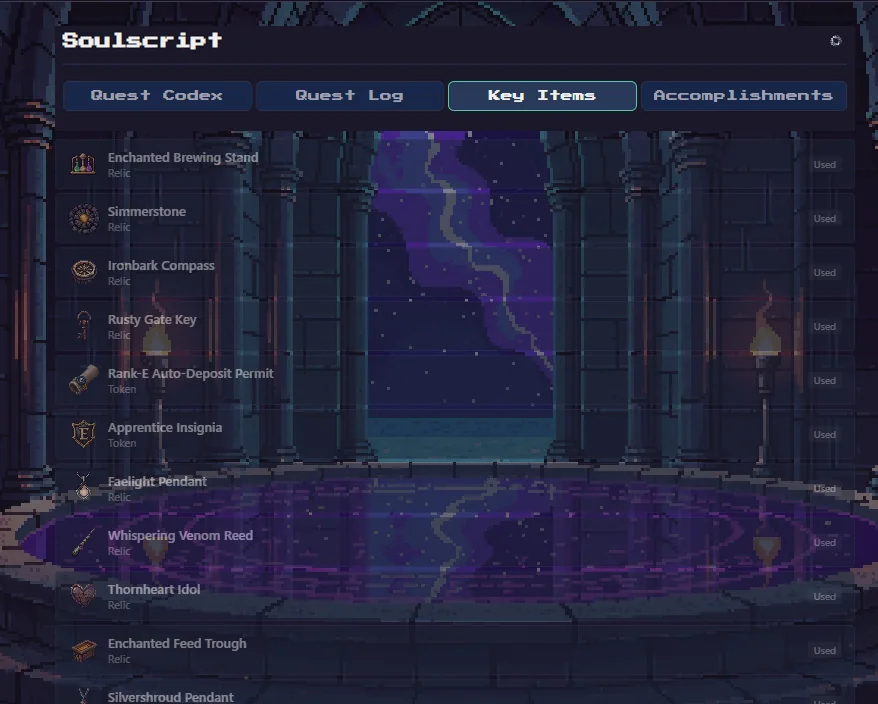
Relics come from questing. Working through quests eventually yields Key Items, which you obtain in Soulscript. There is no separate grind for them; they arrive as quest progress arrives.
Placing relics in the shrine
The shrine is a grid, and relics have footprints. Some take a single block, others need two slots horizontally, so a relic you can afford in Grace terms may still not fit where you want it.
This gets tighter the further in you get. Early on placement is barely a consideration; later it becomes a packing problem laid over the Grace budget, where the arrangement that fits and the arrangement you want are not always the same.
Levelling by offering
Levelling happens on the second tab, Offering. You give up an item and receive experience for it.
The useful property is that Sanctum sits in the Estate, so offerings continue while you are levelling something else. It does not compete for your attention with the skill you are actively playing.
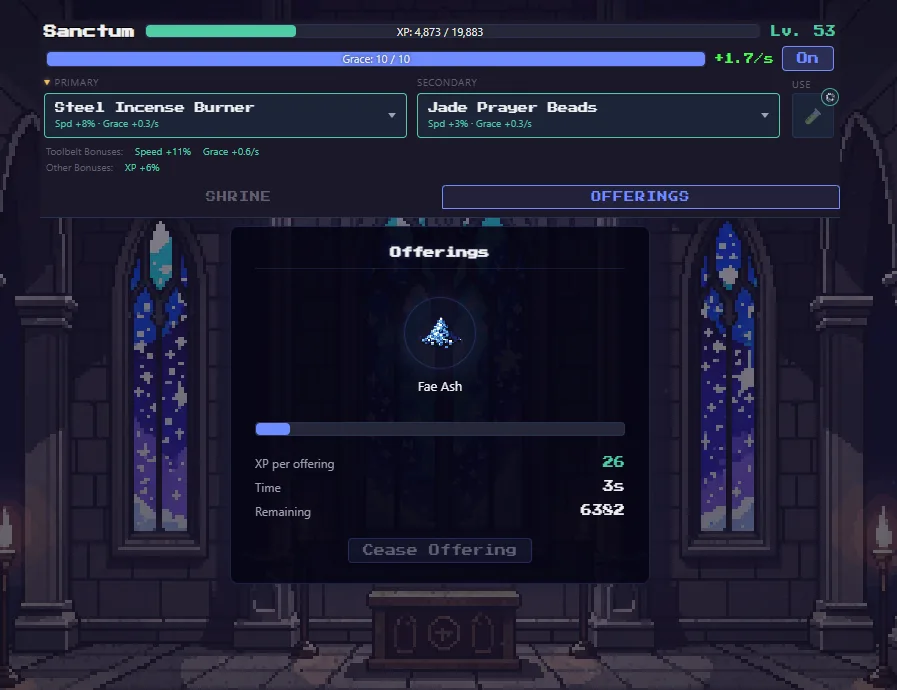
For early levels Fae Ash is the standout. Every mob in the Rank F zone, Faelight Valley, drops it at 100%, the zone clears easily with Incantation, and each offering returns 25 experience. That combination — guaranteed drop, trivial clear, high return per item — is hard to beat before you have anything better.
Tools
Sanctum takes a primary and a secondary tool, and both are crafted by Artisanry: the Incense Burner and the Prayer Beads.
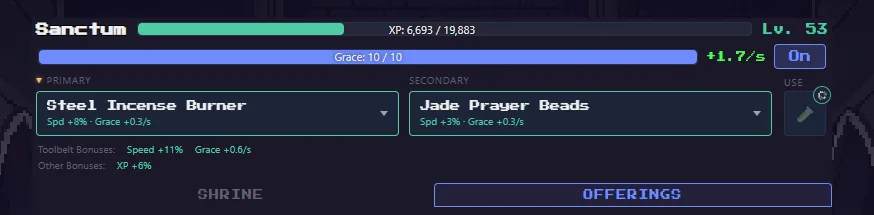
These are worth going out of your way for, because they do not just speed the skill up in the ordinary way — they raise your Grace per second, which feeds straight back into how much relic load the shrine can carry. A tool that improves the budget is worth more than one that improves a rate.
Further secondary tools exist from Guilds and probably from later quests, but they sit past where the skill has been explored so far.