Going Medieval Cold Room Temperature Guide for Food Storage
The practical target for a Going Medieval cold room temperature is 5°C and below. That is the point where food storage becomes reliable enough to slow rot dramatically, with colder rooms performing better.
The best results come from combining depth, isolation, and room layout. Underground rooms stay cooler than surface buildings, but only if you keep heat sources out of the room radius and avoid connecting too many floors into one shared space.
What Temperature Should a Cold Storage Room Aim For?
Short answer: 5°C and below.
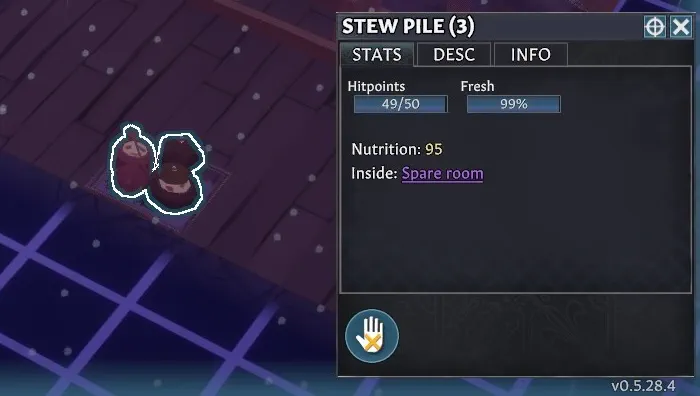
That target lines up with the spoilage results from stew piles placed in different locations around the settlement:
- In the field outside, 23.9°C — took 2 days to rot.
- In the field outside while raining, 11.5°C — took 4 days to rot.
- In a wooden house, 19.4°C — took 5 days to rot.
- Underground, 7.2°C — took 20 days to rot.
- Underground, deeper, 4.4°C — never rotted.
- Underground, deepest, -1.8°C — never rotted.

The takeaway is simple: if the room can stay at or below about 5°C, food storage becomes much safer. Below that, rot slows to the point where the storage room is effectively stable for normal use.
Room Temperature Basics: What Actually Changes the Cold?
Going Medieval room temperature is not just about how far down you dig. The game appears to care more about what is above the room and how the space is connected than the floor level alone.
A few factors matter most:
- Outside weather still affects exposed spaces.
- Underground depth helps, but depth by itself is not the whole story.
- Wooden floors underground can add heat.
- Room connections can average temperatures together.
- Room size also changes the result.
The cleanest way to think about it: a cold storage room works best when it is shielded by dirt or solid structure above it, isolated from warmer rooms, and kept free of unnecessary underground wooden flooring.
Watch Out for Stairs and Shared Room Temperature
Stairs do not fully separate rooms.
If you dig downward and leave the stair connection open, the game can treat the upper and lower floors as one larger room. That means the temperature gets averaged across the connected space instead of dropping cleanly on the lower level.
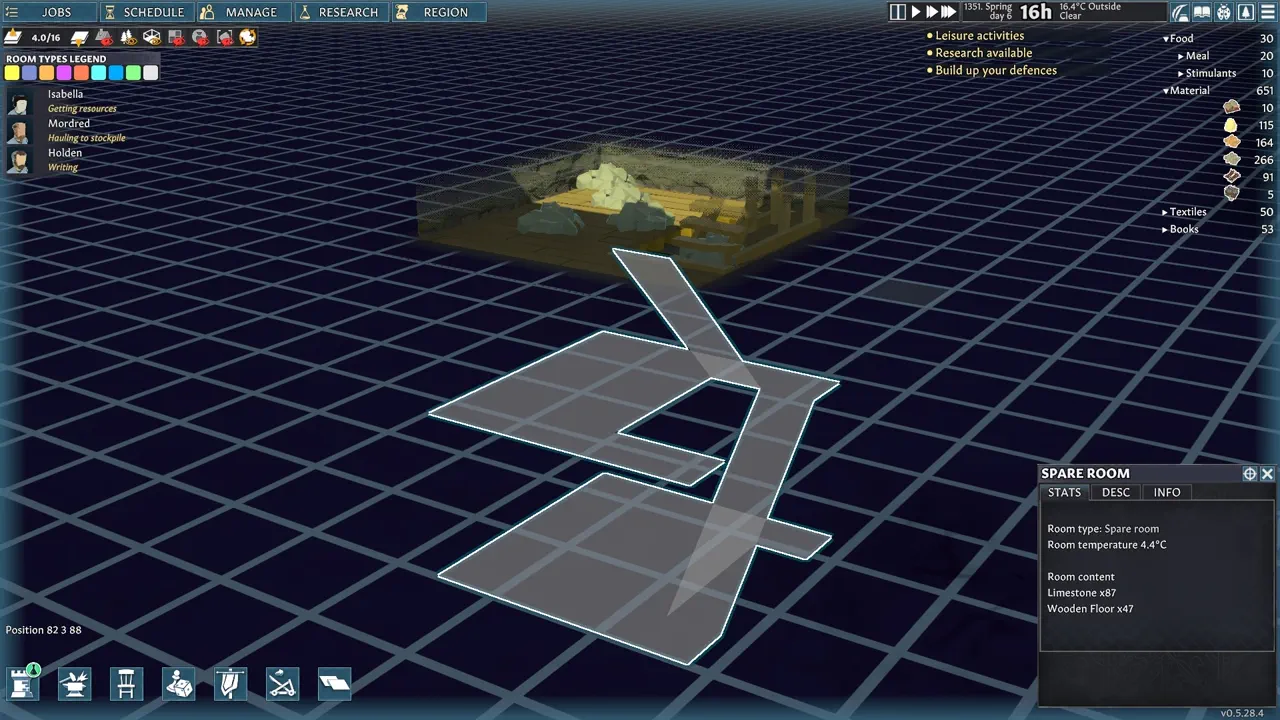
That makes cold storage harder to manage because the warmer floor can pull the lower room up with it.
The practical fix is straightforward:
- Create the storage room on the lower level.
- Separate it from the stair area with a door.
- Avoid leaving the stairwell as a free connection between warm and cold sections.
If the lower room is still tied into the upper floor, expect worse cooling.
What Matters Most Is What Sits Above the Room
The most important temperature factor is not just depth. It is what is directly above the room.
A room buried under dirt holds cold better than a room stacked under layers of wooden floors. That is why two spaces on different floors can end up with very different temperatures depending on the material above them.
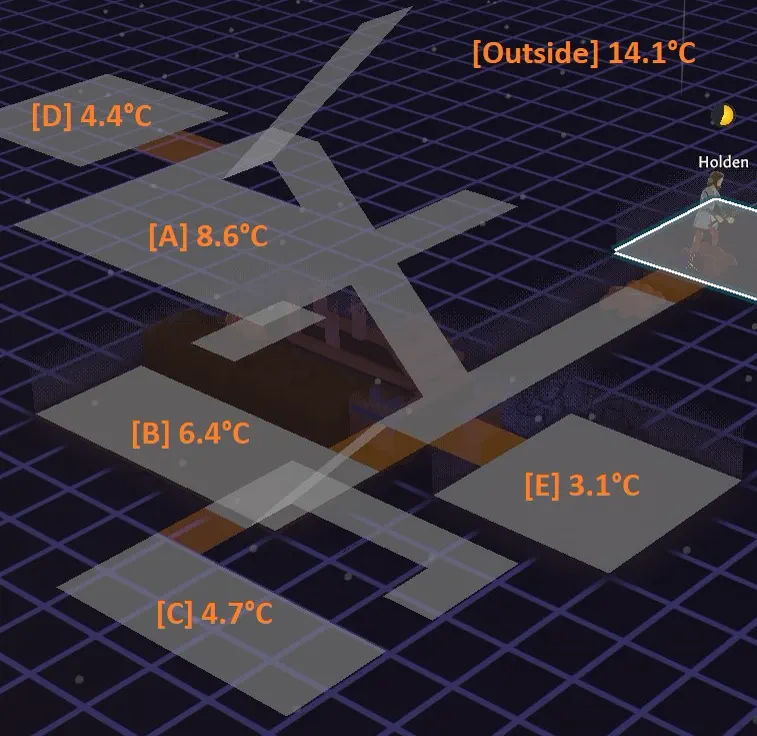
In the source example, rooms A, B, and C are stacked with wooden floors between them. Rooms D and E sit in positions where more dirt is above the storage space. Even though some of those rooms are on the upper floor, they end up colder than the stacked wooden-floor room because dirt blocks heat better than thin floor layers.
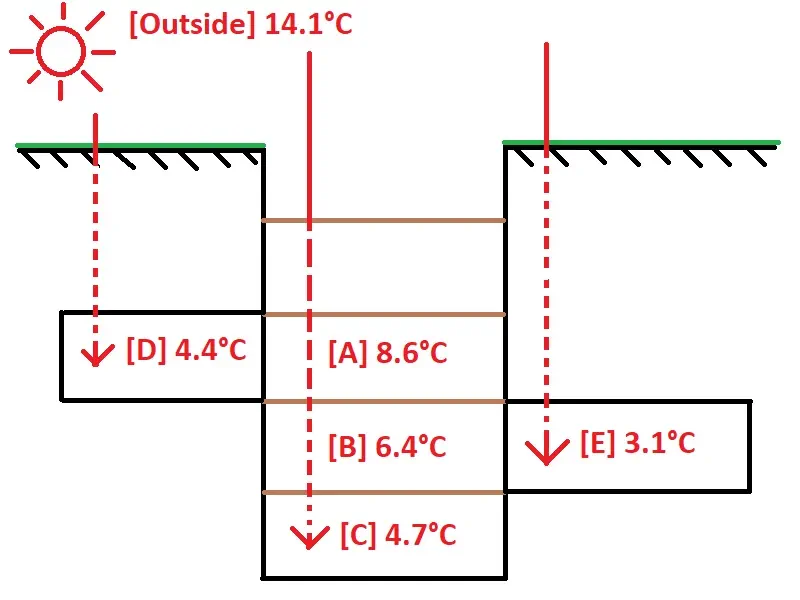
The rule of thumb is:
- Dirt above the room = better cooling
- Wood floors above the room = more heat leakage
- Stacked connected floors = warmer average temperature
For food storage, that usually means underground or mountain-side placement is stronger than trying to build a surface room and bury it in architecture.
Wooden Floors Underground Add Heat
One of the most important discoveries is that wooden floors underground generate heat.
That matters a lot for cold storage design, because a room that looks perfectly buried can still warm up if you cover the underground floor with wood.
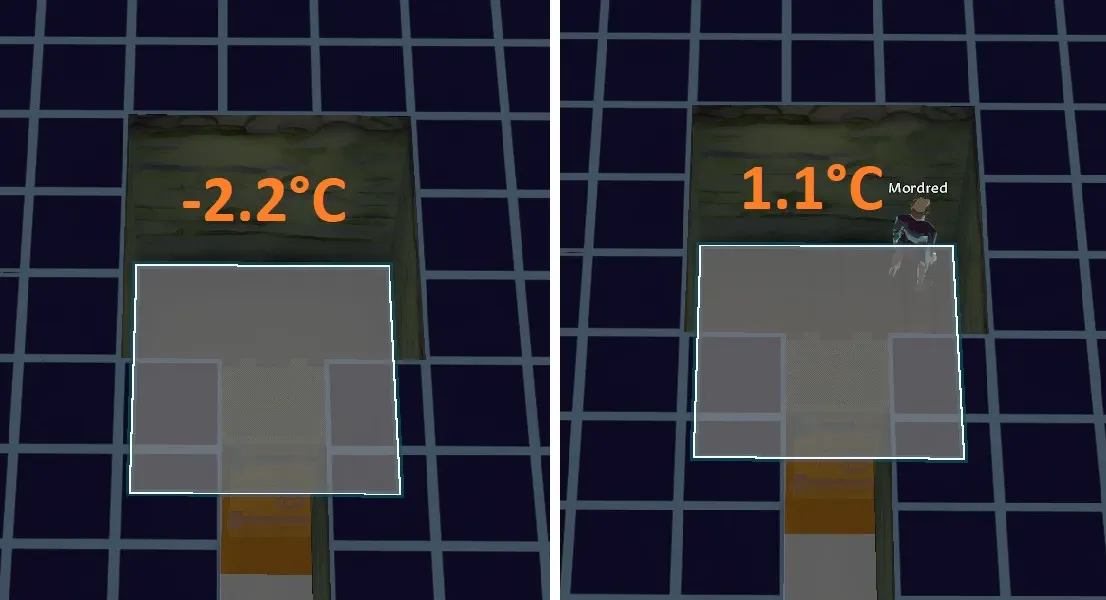
In the example:
- A 3x3 underground room with no floor registered -2.2°C
- The same room with 3x3 wooden floors rose to 1.1°C
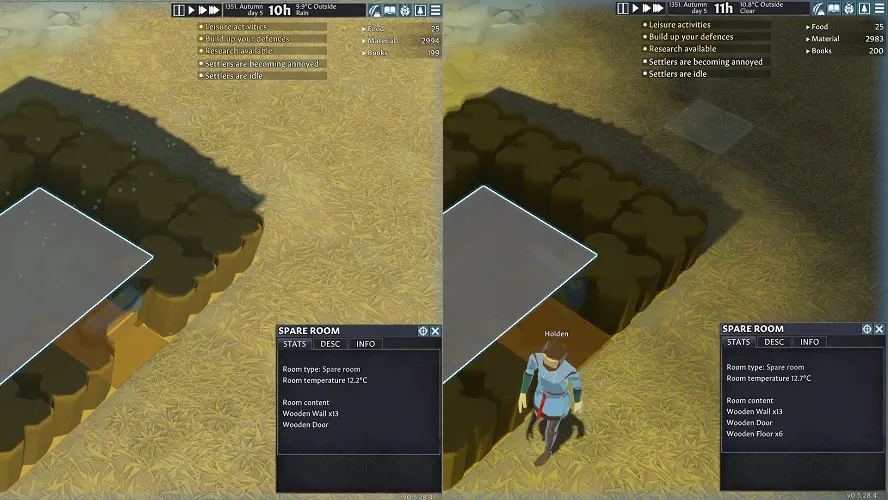
That is a significant jump for a food room.
Above ground, this effect is much less noticeable. In the source comparison, the room without floor was 12.2°C, while the room with wooden floor was 12.7°C—a very small difference, likely influenced by outside temperature changes.
Practical takeaway:
- Underground: avoid wooden flooring unless you need it
- Above ground: the floor effect is much less important
- Food zoning still matters: if you remove floor layers, do not zone food storage onto dirt
The Hidden Room Radius Can Raise Temperature
Every room appears to have a wider effective radius than the visible interior. The source calls this an “invisible room radius,” and it matters because the game counts more than just the tiles inside the wall.
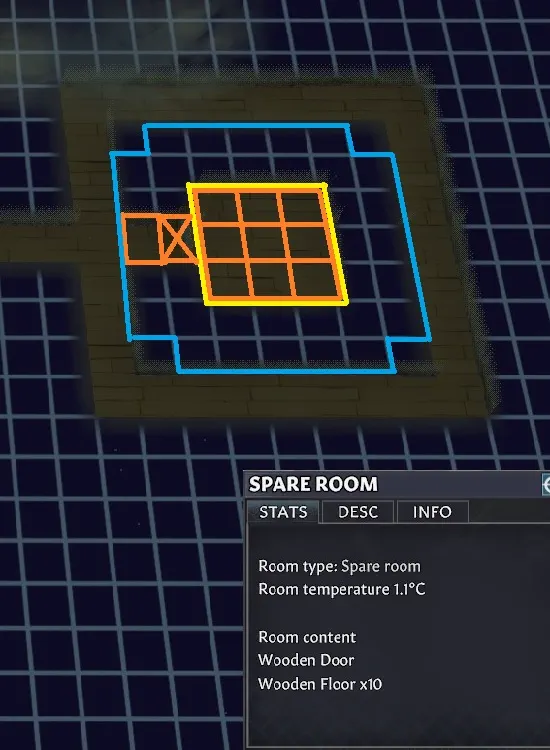
In the example, a 3x3 underground room includes nearby floor tiles and a door within the counted radius. The info box shows 10 wooden floors being counted as part of the room temperature calculation, resulting in 1.1°C.
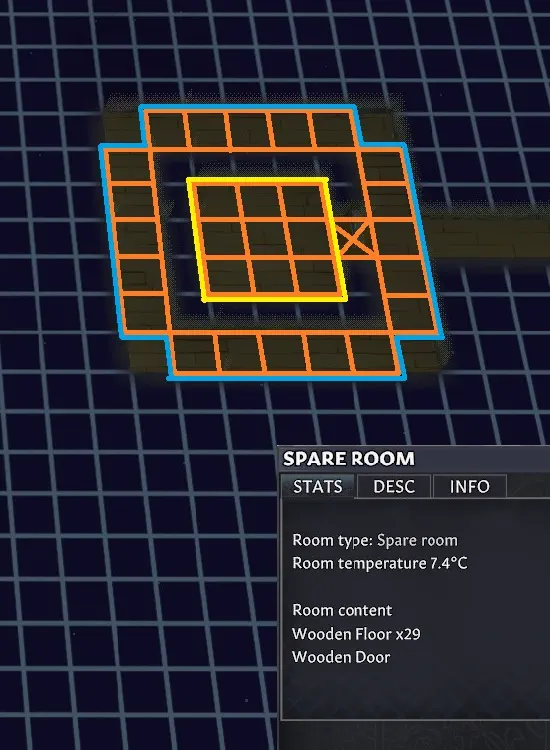
A second example is even more revealing. The room itself is still 3x3, but the surrounding radius pulls in 29 wooden floors, which pushes the temperature up to 7.4°C.
That means the room can warm up from flooring outside the obvious storage area, especially underground where wood creates heat.
Important limitation:
- This floor-radius behavior does not seem to matter much above ground.
- Furniture outside the room does not appear to count the same way as walls and floors.
- You should assume the game is counting a larger temperature zone than the visible storage squares.
Room Size Also Affects Temperature
Bigger rooms can be colder.
That is true both above and below ground, and it lines up with the stair/averaging behavior: when the room expands, the temperature can spread more efficiently across the space instead of staying trapped in a small warm pocket.
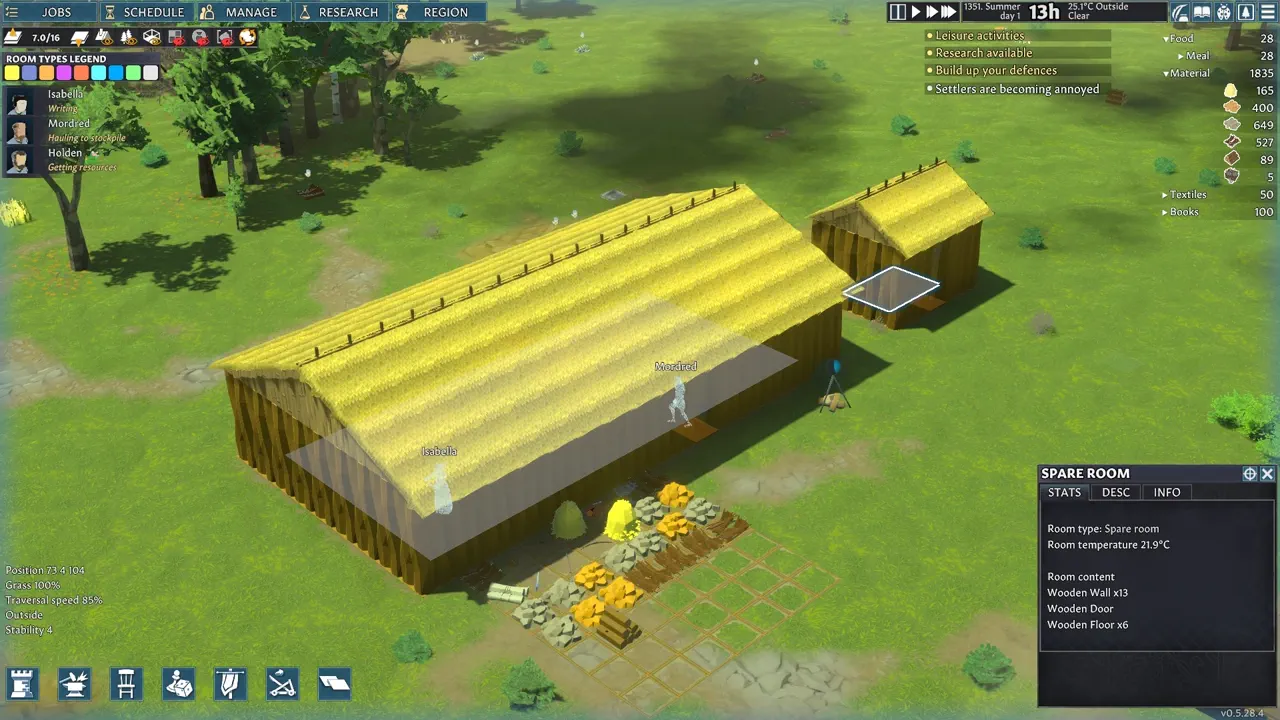
The source compares two buildings with the same materials: wooden floor, wall, door, and thatched roof. The only major difference is size. The larger building ended up at 19.5°C, while the smaller one sat at 21.9°C.
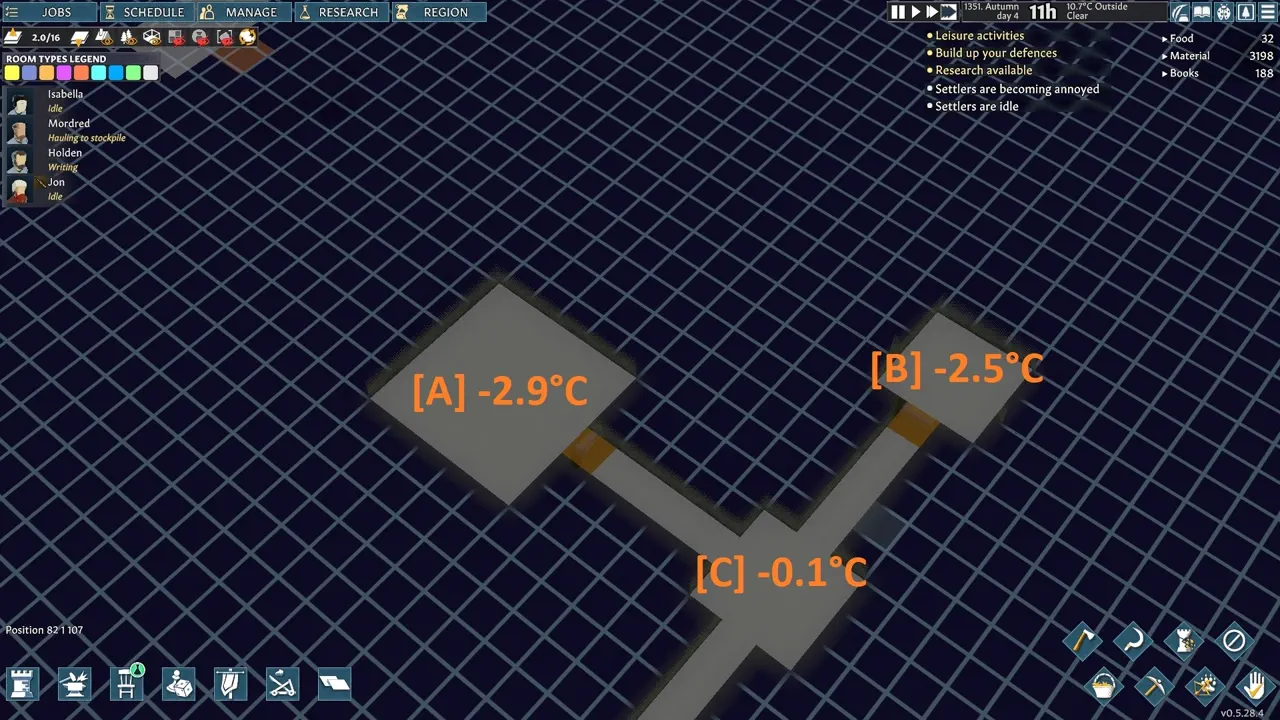
The same pattern appears underground. A larger underground room was colder than a smaller one.
The useful takeaway is not “make everything huge,” but rather:
- Small connected rooms tend to stay warmer
- Larger open spaces can cool more effectively
- Room shape and layout matter as much as depth
Is a Cold Room Above Ground Possible?
Yes, but it is usually not the most efficient option.
The source test shows an above-ground setup that tries to mimic underground cooling by using a pyramid of dirt around a small central storage space.
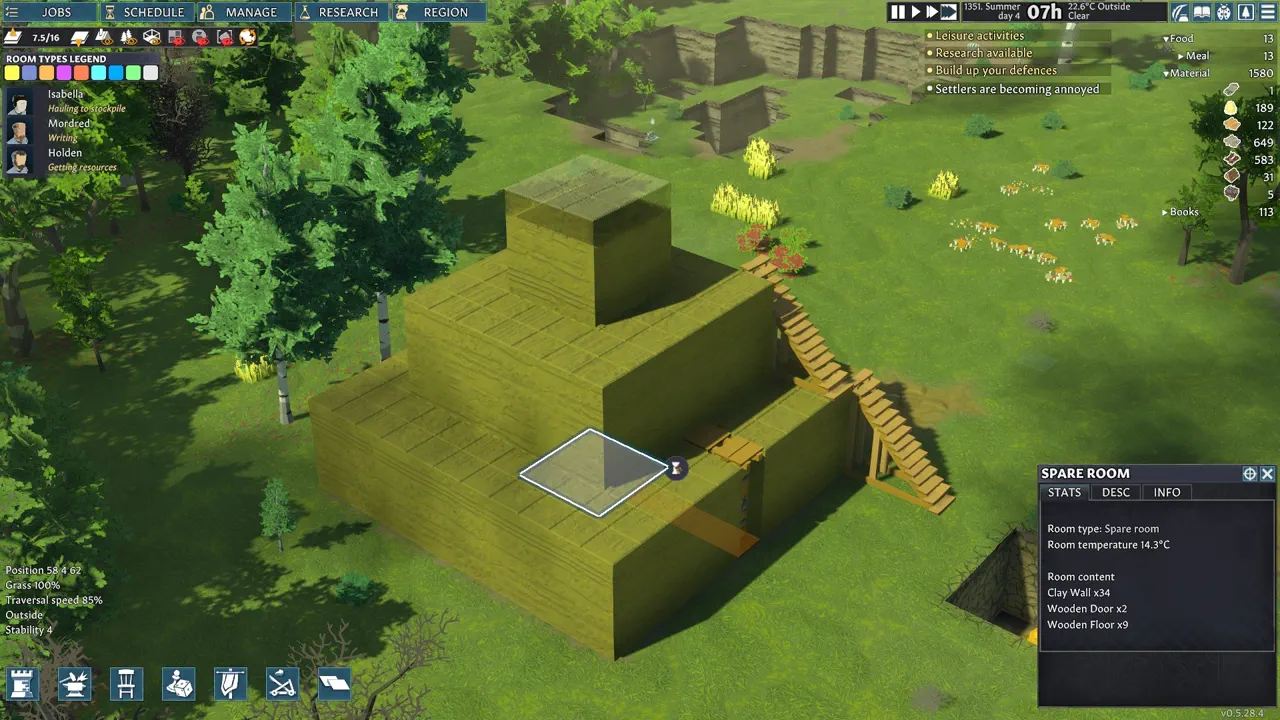
That layout reduced the temperature from 22.6°C to 14.3°C. Keeping the walls and roof expanding outward should continue lowering it over time, but the resource cost is high.
For most runs, that is more effort than it is worth. You can build a workable above-ground cold room, but underground solutions are usually faster, cheaper, and more reliable.
Practical Cold Storage Room Designs
The best storage layouts are the ones you can build early without wasting too many materials.
Mountain tunnel setup
If your map starts near a mountain, the strongest option is often to dig a tunnel into it and place food storage in the nearest usable section.
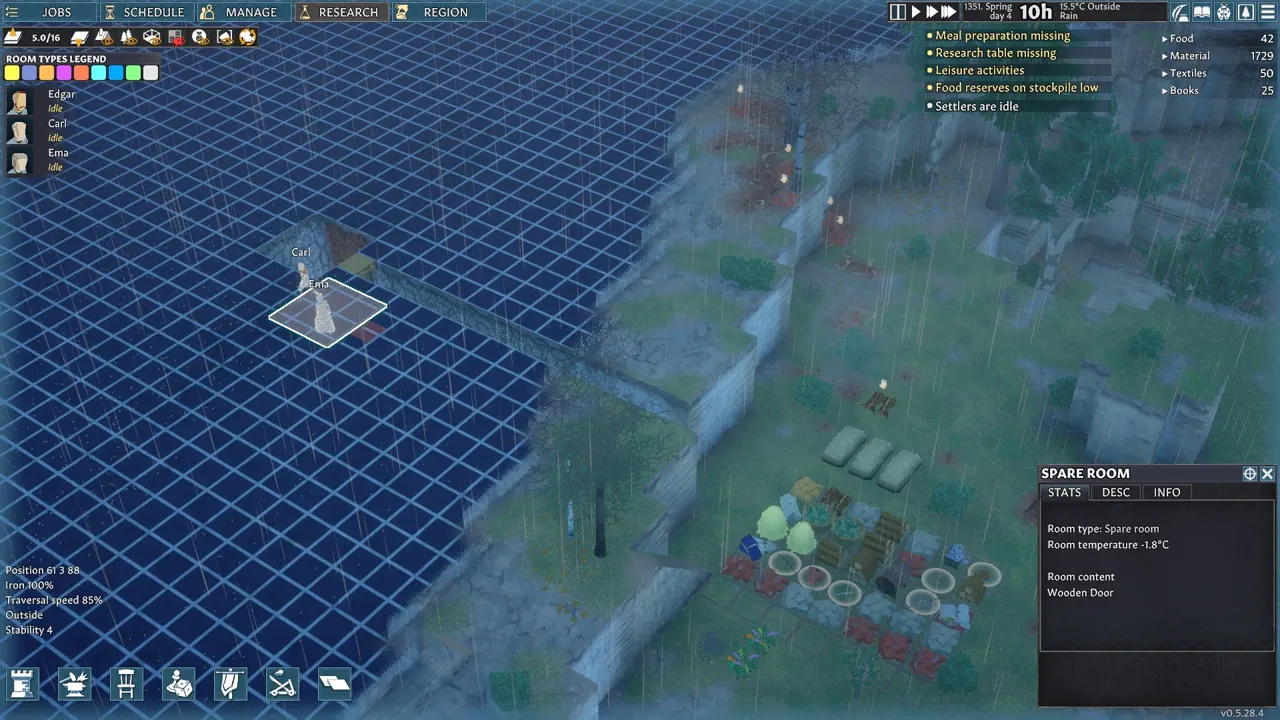
The longer the tunnel, the colder it gets. In the source example, a tunnel room reached -1.8°C while the outside temperature was 15.5°C.
Main downside:
- If you hit a metal vein, digging slows down
- Only one villager can work a one-tile tunnel at a time
Still, for raw cooling power, mountain tunnels are one of the best low-tech options.
Two floors down with a separated stair room
For most other starts, digging two floors down and placing the storage room at the end of a stairwell is a strong early-game choice.
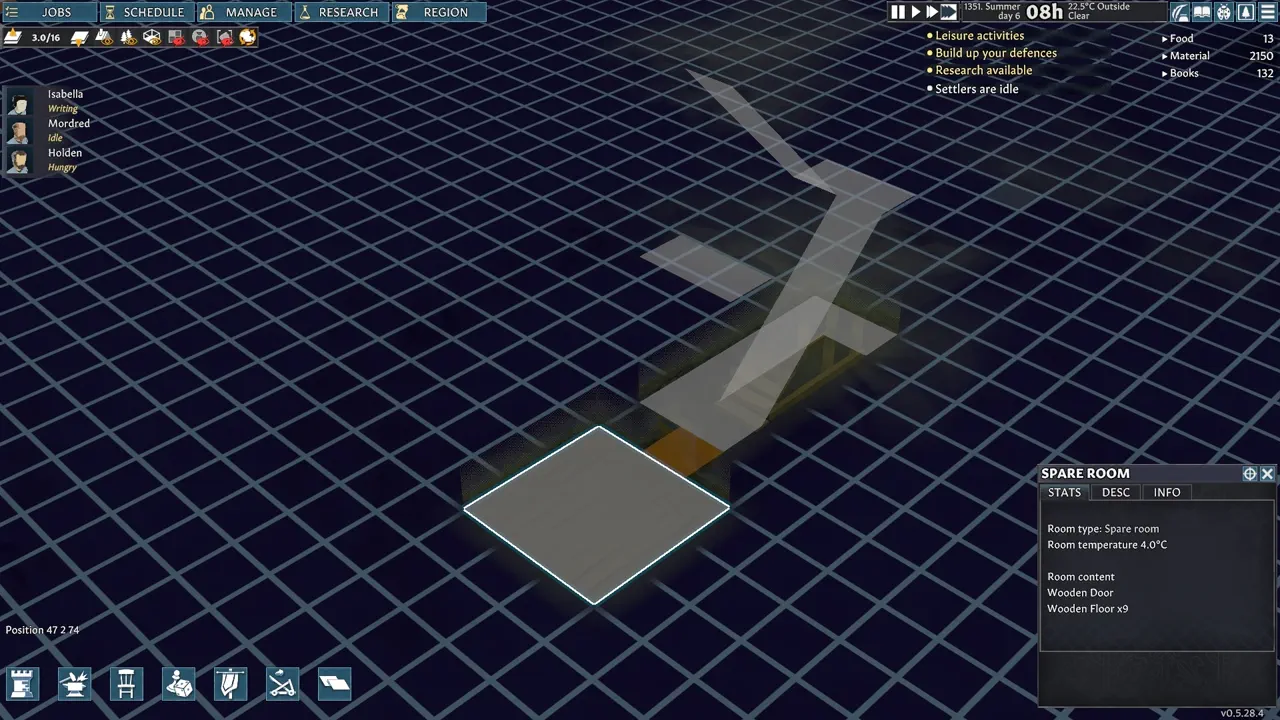
The source example reached 4°C from 22.5°C on a sunny day.
To make this setup work better:
- Dig down two levels
- Use a door to separate the cold room from the stair access
- Keep the room isolated from warmer upper floors
This is the simplest practical layout if you want cold storage without heavy construction.
Expand the room without flooring the outer layers
If the temperature still is not low enough, expand the room and remove the outer wooden floor layers around it.
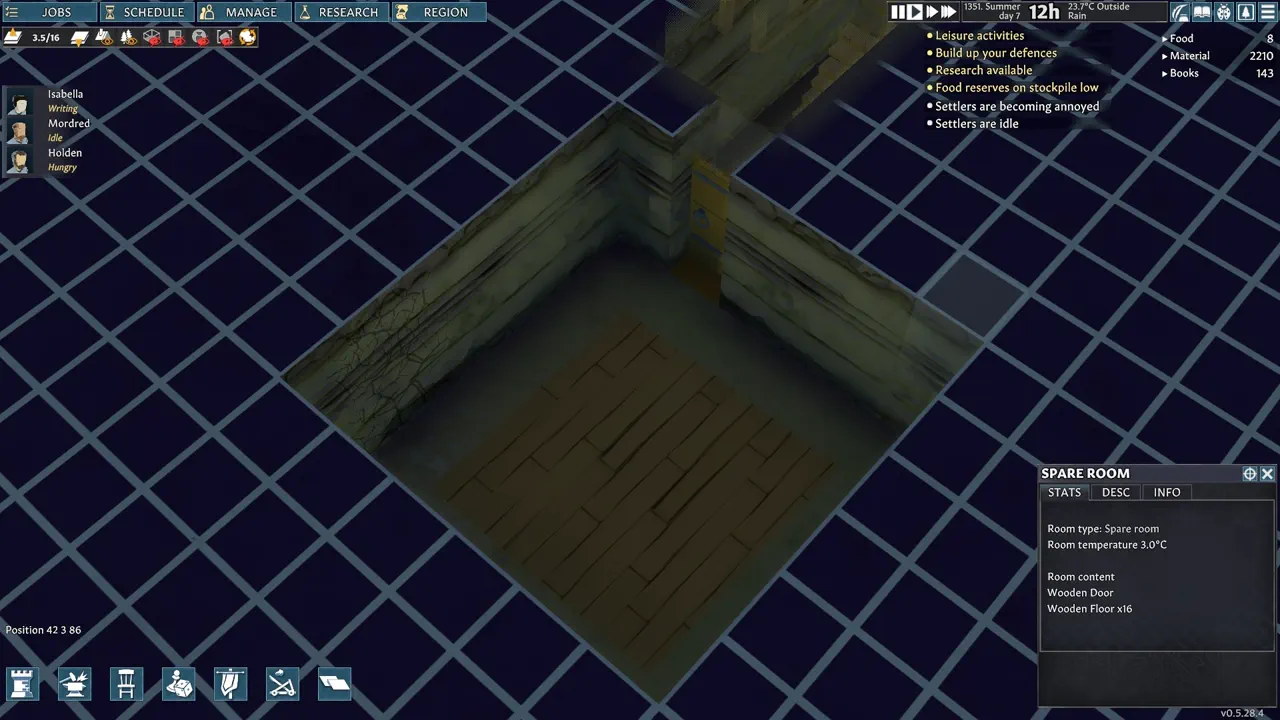
Because underground wooden floors create heat, reducing the amount of floor in the surrounding area can lower the room temperature. Just keep the food itself zoned on proper flooring.
With this method, the source lowered the room to 3°C.
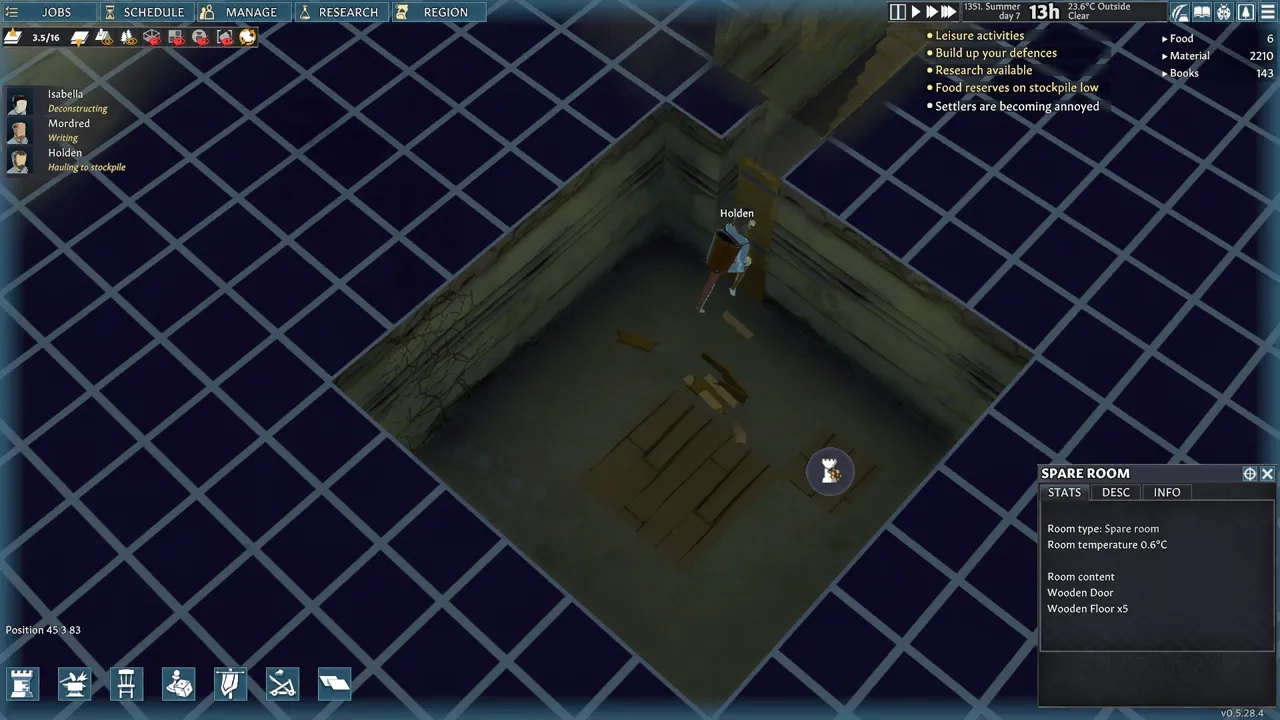
After removing another outer layer of wooden floor, the temperature dropped again to 0.6°C.
That makes the basic rule very practical:
- expand the room
- avoid unnecessary underground flooring
- keep food on valid floor tiles
- keep warm connected structures out of the radius
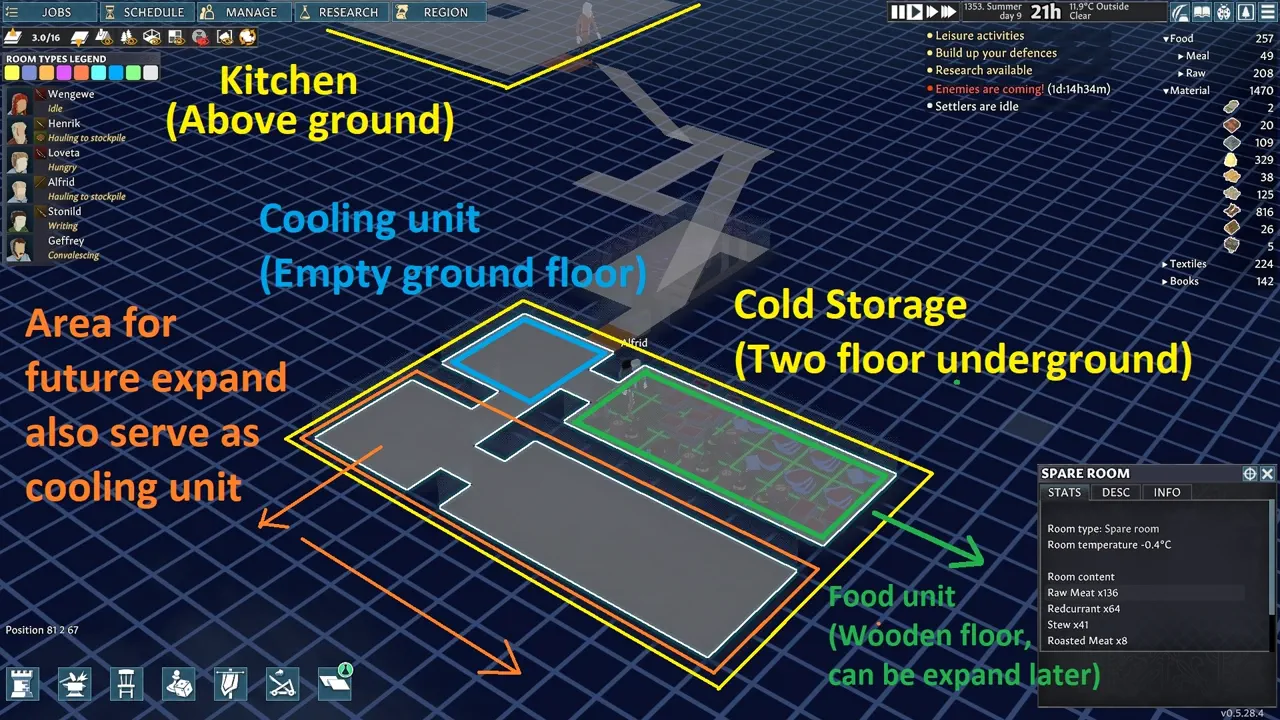
The source’s final design separates the cold room into sections, using one part as a cooling unit and another as storage. That is a sensible approach once you understand how room temperature behaves, but the exact layout can be adjusted to fit your base.
Stability and Underground Expansion
Stability does not change temperature directly, but it matters a lot if you are building a large underground cold storage room.
In Going Medieval, stability acts like a gravity support system. Structures need support below them or nearby, and if stability reaches zero, the object collapses.
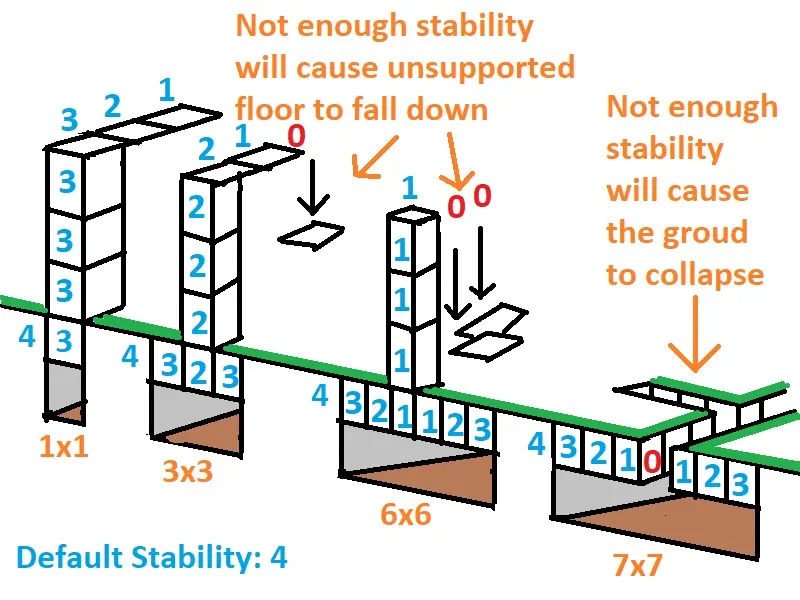
The source explanation is:
- Stability starts at 4
- If the object below is missing, nearby support is used instead
- The best nearby support value is reduced by 1
- If there is no support left, the object cannot be built
The practical effect for cold rooms is that large underground spaces can become structurally difficult very fast.
A few important points from the source:
- In a small 1x1 underground room, the wall stability above can drop to 3
- That stability lets you extend support only so far
- Once underground expansion gets large enough, the ground above can collapse
- Around a room larger than 7x7, collapse becomes visible because the stability of the dirt above reaches 0
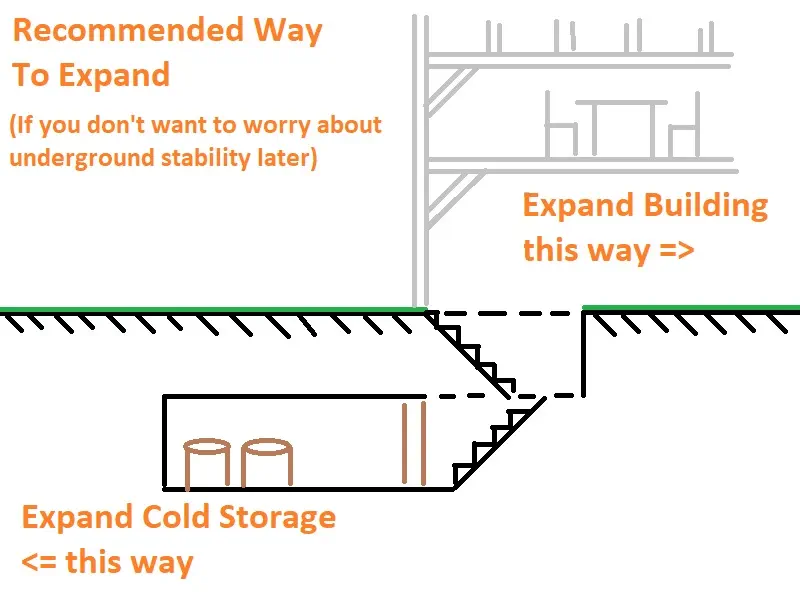
The safest approach is to expand your underground cold storage away from your main building.
That way, if the room gets bigger, you do not risk collapsing the structure above your castle or living area. For a normal food store, this is the cleaner method.
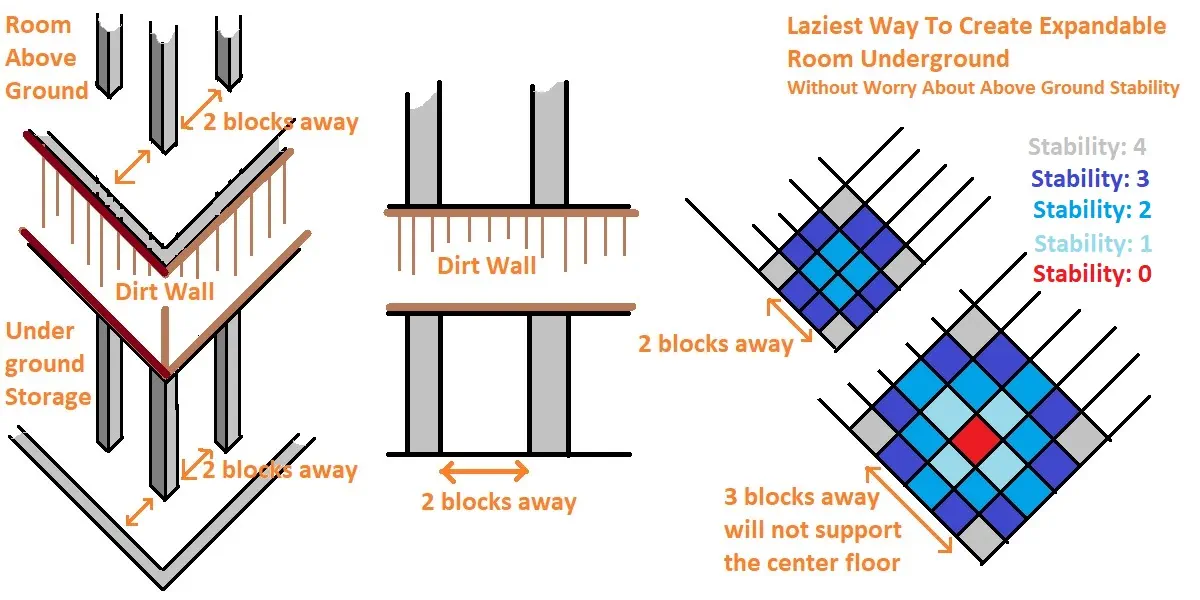
If you want an underground room directly beneath a building, the source recommends a pile foundation style layout, with pillars spaced about 2 blocks apart. That helps maintain stability for floors above, but it also takes up space inside the room.
A few layout notes:
- The more compact and messy the support pattern, the harder it is to work with
- A straight pillar line is easier to manage than scattered supports
- A gap of up to about six tiles between supports may still work, depending on the shape
- Always check stability before expanding the room sideways
Best Build Rules for Cold Food Storage
If the goal is a reliable food room, these are the rules worth following:
- Aim for 5°C or lower
- Prefer underground or mountain-side placement
- Separate cold storage from stairs with a door
- Avoid connecting warm floors to the storage room
- Be careful with wooden floors underground
- Remove unnecessary outer floor layers when temperatures are too high
- Keep an eye on room size and room radius
- Watch stability before digging large spaces under your base
The most dependable early-game answer is still a short underground room, isolated from the stairwell, with as little wooden flooring as possible around the storage area.