BookStore Simulator gives you a shop, 1,500 to spend and no particular pressure — and then quietly makes almost every purchase matter. Foot traffic is the real currency, and nearly everything you do moves it up or down. Some customers walk in and browse without buying. Some leave reviews that are flatly untrue. The rest respond, fairly reliably, to things you control.
Your shop is a short walk from the apartment: leave, turn left, left again at the intersection, then right. A pillar of pink light marks it. That the building takes a moment to find is a small joke at the expense of the first thing you should buy.
Spend the opening 1,500 in this order
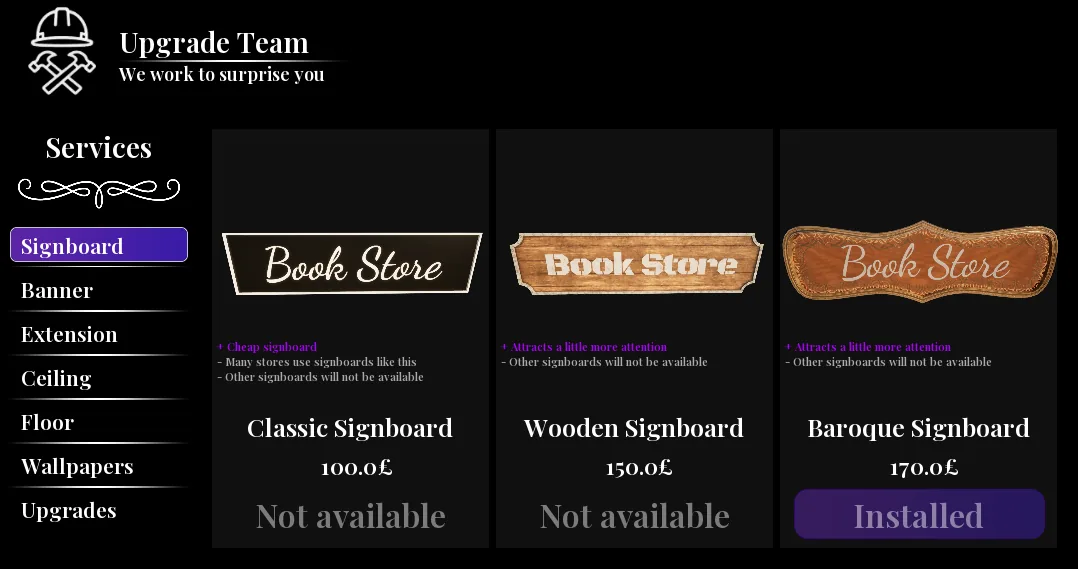
The sign is the single highest-value purchase in the game, and it is the first one to make. The starter board brings in one or two customers a day — not a slow start, a dead one. A proper signboard costs 150 or 170 depending on which design you prefer, and it raises your everyday passive traffic permanently.
Permanently is the word to sit with. Once one is installed the other signs are no longer available, and they leave the catalogue for good. There is no swapping later, no refund, no second look. Pick the one you want to look at for the rest of the save.
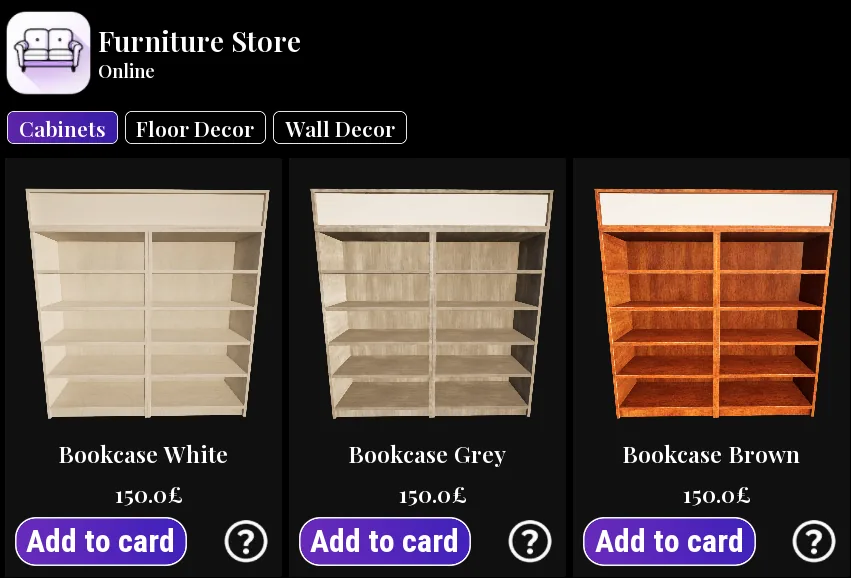
Bookshelves are 150 each. To place one, press R to open the upgrade menu, click the spot you want, then click Install on the item you have chosen.
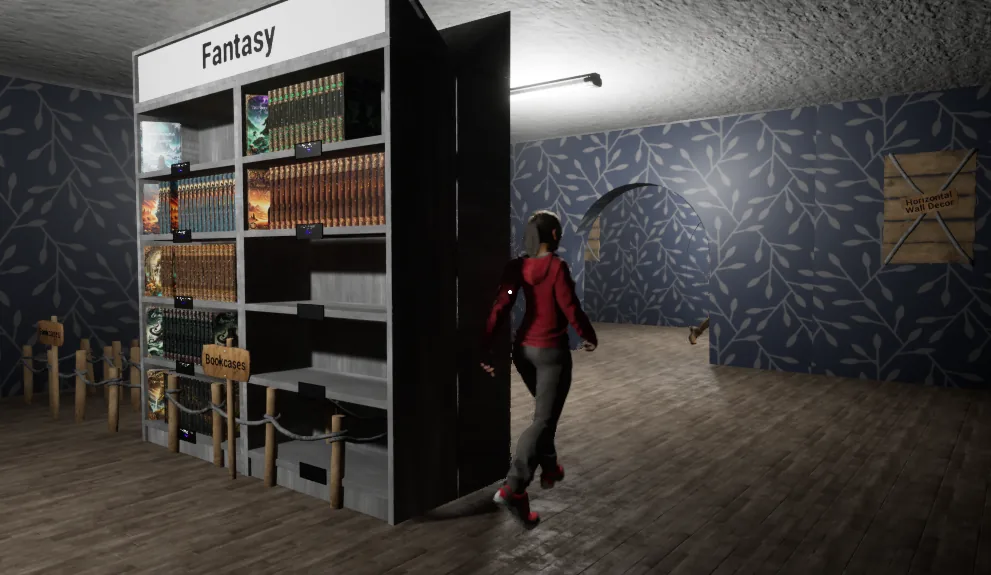
Books come in boxes of 20 for 50 at the starter tier, and there are nine genres before magic enters the picture. Buy one box of each. Every customer has their own preferences, so carrying all nine means nobody walks in and finds nothing for them — which, as the reviews will shortly tell you, is a thing customers notice and complain about.
Between the sign, a shelf or two and a box of every genre, expect to have spent somewhere between 750 and 920 of your 1,500. The remainder is your advertising budget, and it should not sit idle.
Deliveries run on the clock
Orders placed between 6:00 and 21:00 arrive immediately. Order at night and the truck comes first thing in the morning at 6:00. Either way you will hear it honk when it pulls up, and the boxes land outside the back door in the loading area.
One order at a time, and the loading area has to be empty before you can place another. Clearing it is not optional housekeeping — it is the gate on your next restock.
The markup ladder
Prices are the fastest lever you have and the easiest one to leave in the wrong position. Straight after opening, with advertising running, you can push everything to maximum and take a large amount of money quickly. Leave it there and your star rating starts drifting down, which costs you passive traffic — so when the advertising ends, bring it back down.
Roughly what each markup does:
| Markup | What happens |
|---|---|
| 50% | Almost everyone buys. Reviews specifically praise the prices. |
| 75% | Most customers buy. Still complimented on price. |
| 90% | Noticeably fewer purchases, but reviews stay good. |
| 100% | About half buy. Feedback on price turns mixed. |
| 150% | Most browse and leave. Occasional bad reviews, and it gets worse the longer you hold it. |
That last row is worth reading as a temporary tool rather than a setting. A short spike is survivable; a permanent one grinds your rating down.
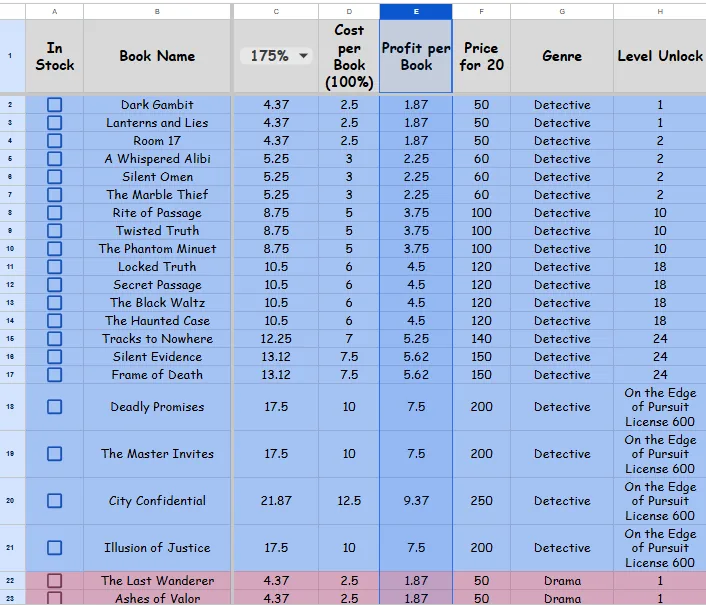
Every title carries its own cost, profit, box price, genre and unlock level.
Books differ from each other in ways the shelf does not show you. Each title has its own cost per book and its own box price, sits in a genre, and unlocks at a particular store level — so the profit on a 4.37 detective novel and a 21.87 one are not the same decision at the same markup.
Opening up and taking money
Click the open and closed sign by the front door to start the day. Customers come in, browse, and when they are ready they queue at the computer and a chime sounds.
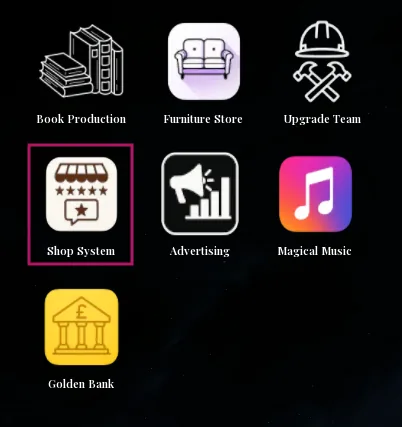
Checkout lives in the shop system app. Open Orders on the left, find the customer’s order, and hit Confirm Order on the right to complete the sale. You can leave that screen up if you alt tab away — worth knowing, because the chime does not always reach you when the game is in the background.
Advertising
Advertising matters most at the very beginning, and there are two sensible shapes for it. The 300 option for a single day is the fast start — take it only if you are set up and ready before you open, because it will be busy. The 100 a day across a couple of days is the gentler version and gives you a steadier ramp.
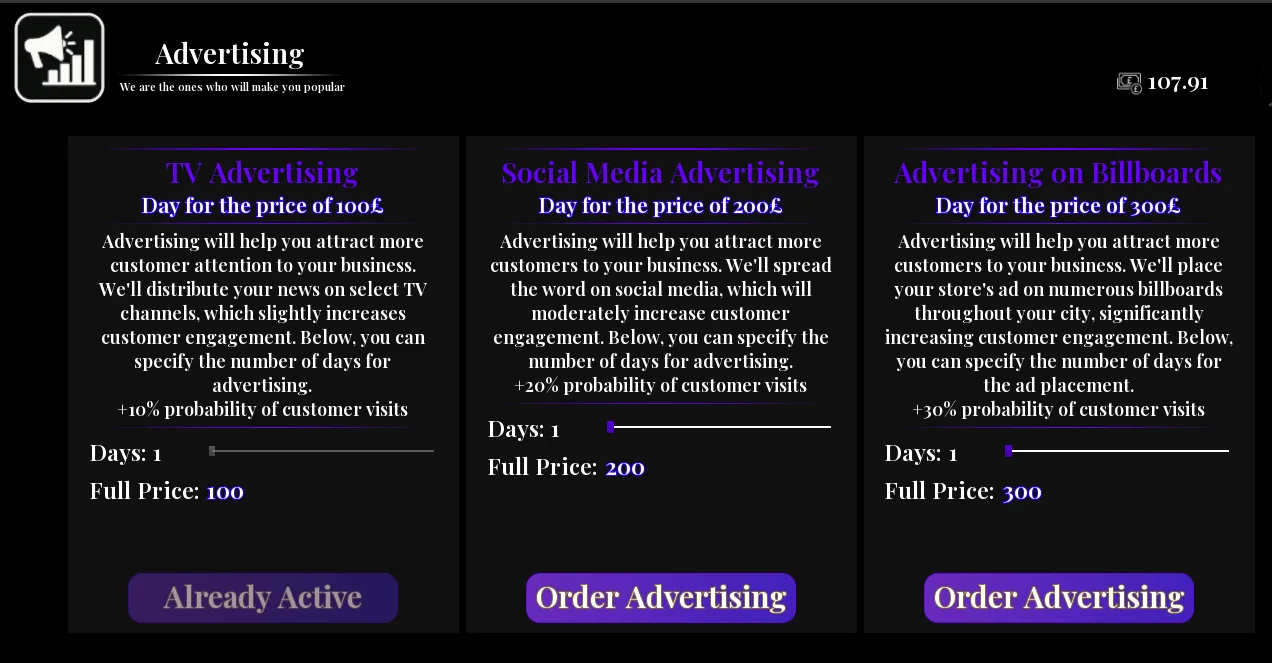
After the opening push you do not need it running constantly. It is the thing you reach for when sales need a lift.
Reviews are real feedback
The star rating is not decoration. Customers comment on six specific things, and each one is something you can fix:
- Cleanliness
- Organisation, meaning shelf labels
- Prices
- Checkout speed — self checkout costs 800 and settles this one permanently
- Diversity of books, in the sense of every genre being represented
- Quantity of books, meaning full shelves rather than empty ones
The complication is that a small number of customers simply lie. You will occasionally get a bad review for something demonstrably untrue — slow checkout when you have self checkout installed, for instance. So one bad review is noise. Several bad reviews saying the same thing are not, and at that point the correct response is to believe them and change something.
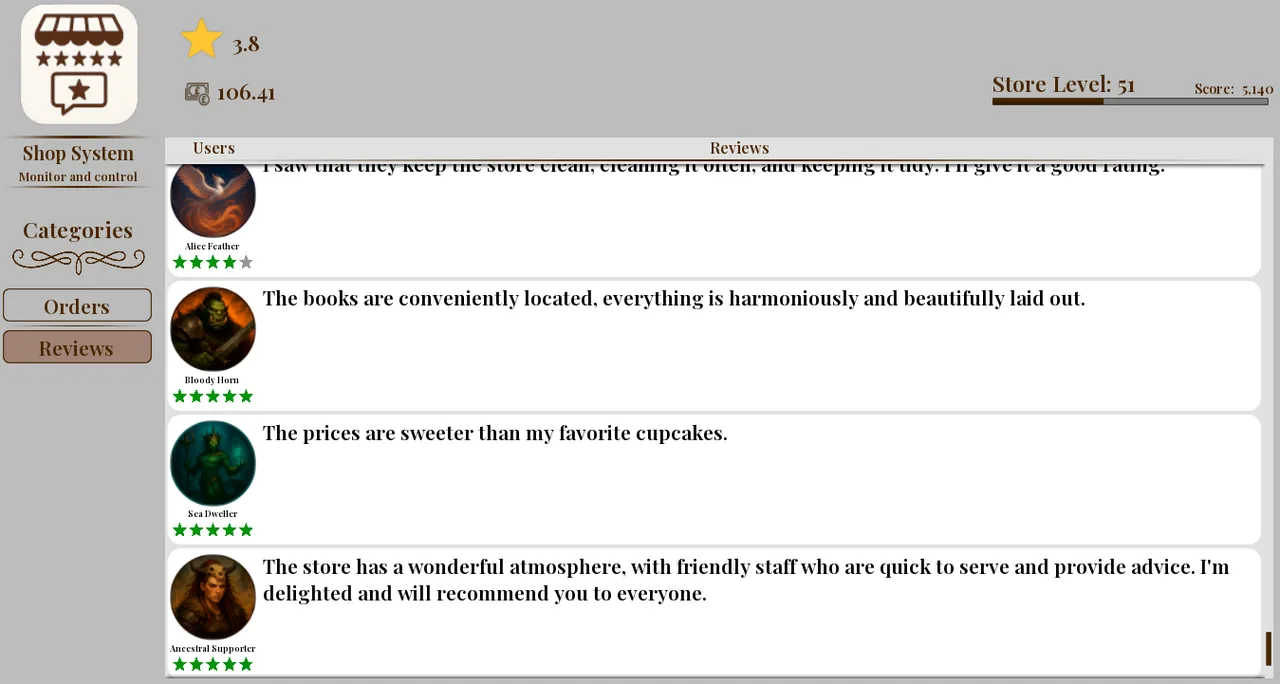
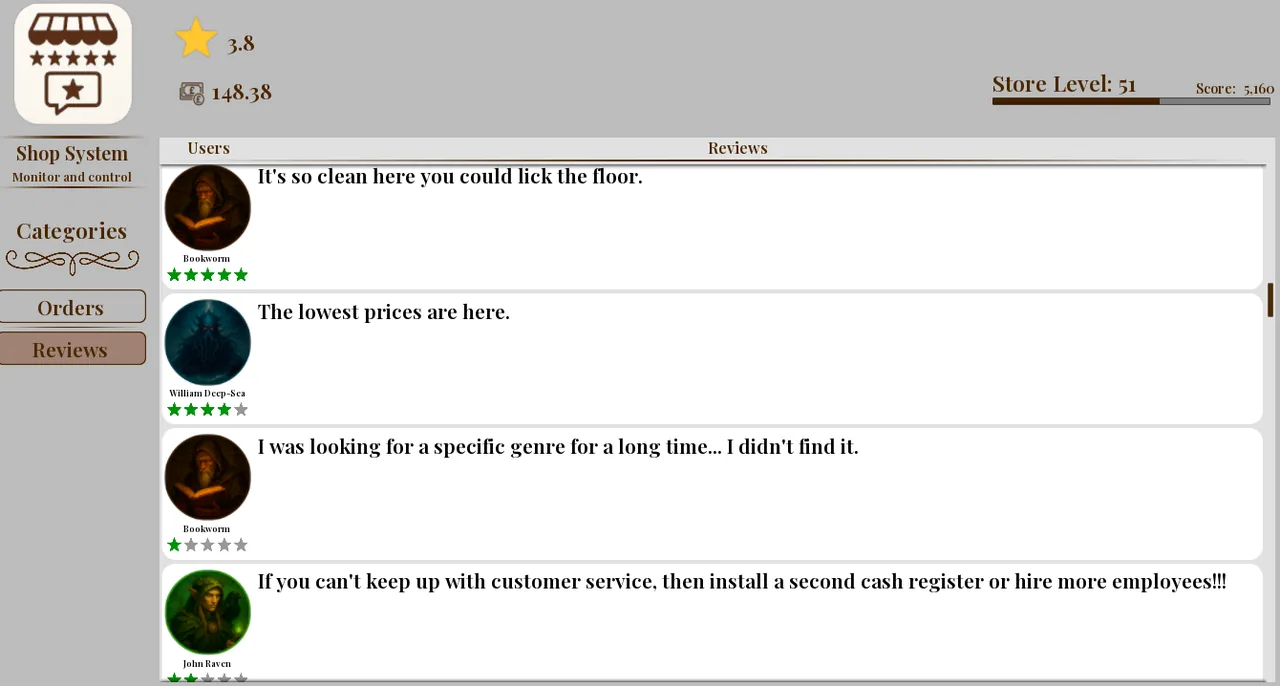
Three things move customer traffic: a better sign, a better star rating, and advertising. Above four stars is where the difference becomes obvious.
Cleaning and restocking
Cleaning is straightforward. Press E to pick up litter, and once you have collected enough a bag appears in your hands — carry it out to the bins behind the store, in the delivery area. Spills and debris need the mop, which lives near the computer.
Restocking has one genuine trap in it. There is a stack of empty boxes you can take from to move books between shelves. But when a book sells out, its shelf slot stays reserved for that title, and there is currently no direct way to release it.
Two workarounds exist. Reorder the book, put it on the shelf and immediately take it back off, which frees the slot. Or move everything you no longer want to carry onto one dedicated shelf, let it sell out, then remove that shelf and put it back down — which clears every reserved slot on it at once.
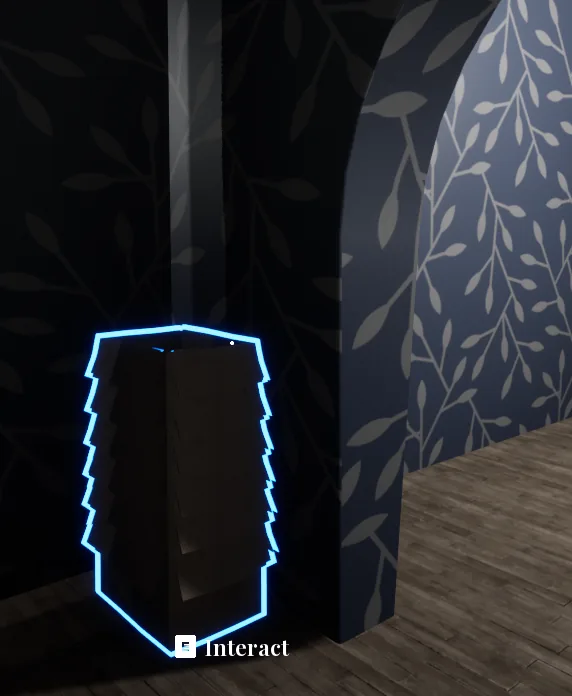
Both are worth knowing early and forgetting later: the skeleton worker, once you have him, handles restocking and cleaning himself.
Loans
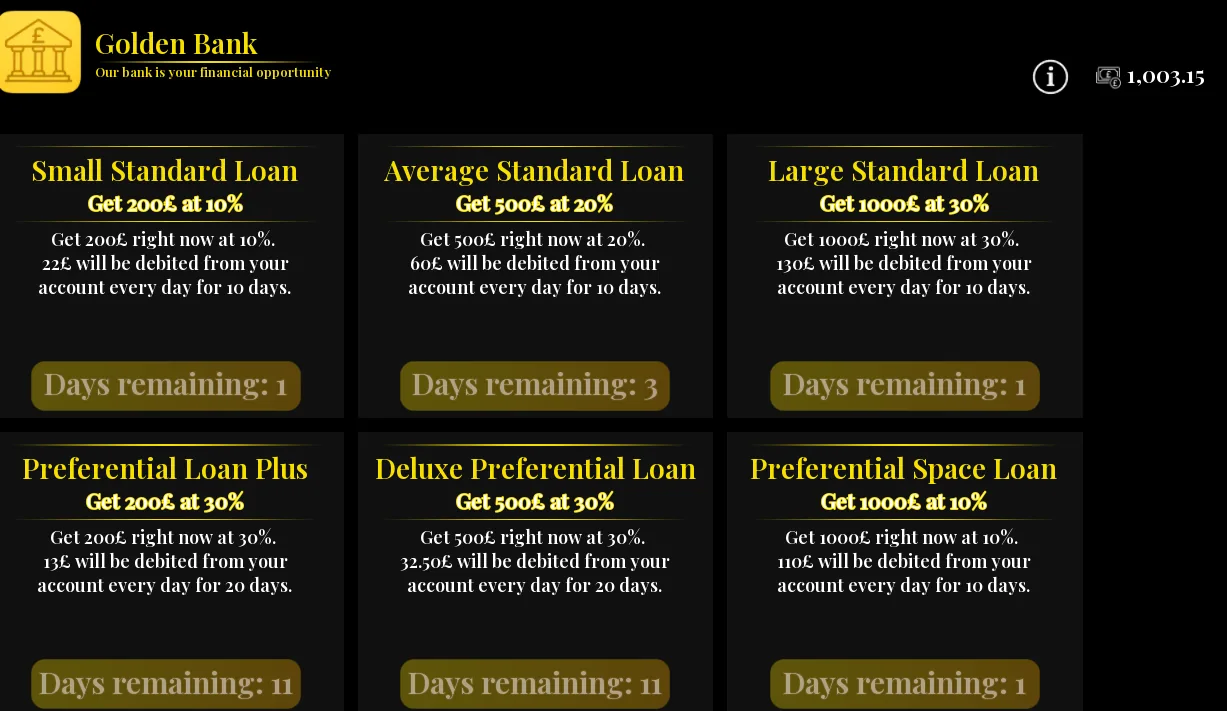
The bank offers six loans, each usable exactly once. They differ in size and in how long the daily repayment runs, and the repayment comes out at the same time every day.
They will also take you into negative money if you borrow without a plan. Have a strategy that already makes money before you touch them.

Banners
A banner costs 50, and the choice is permanent in the same way the sign is.
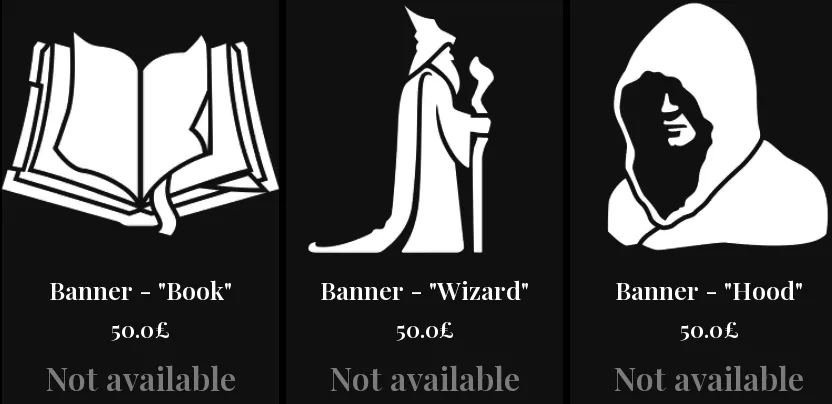

What they actually do is unclear — possibly foot traffic, possibly a nudge toward one genre, possibly nothing but decoration.
Magic
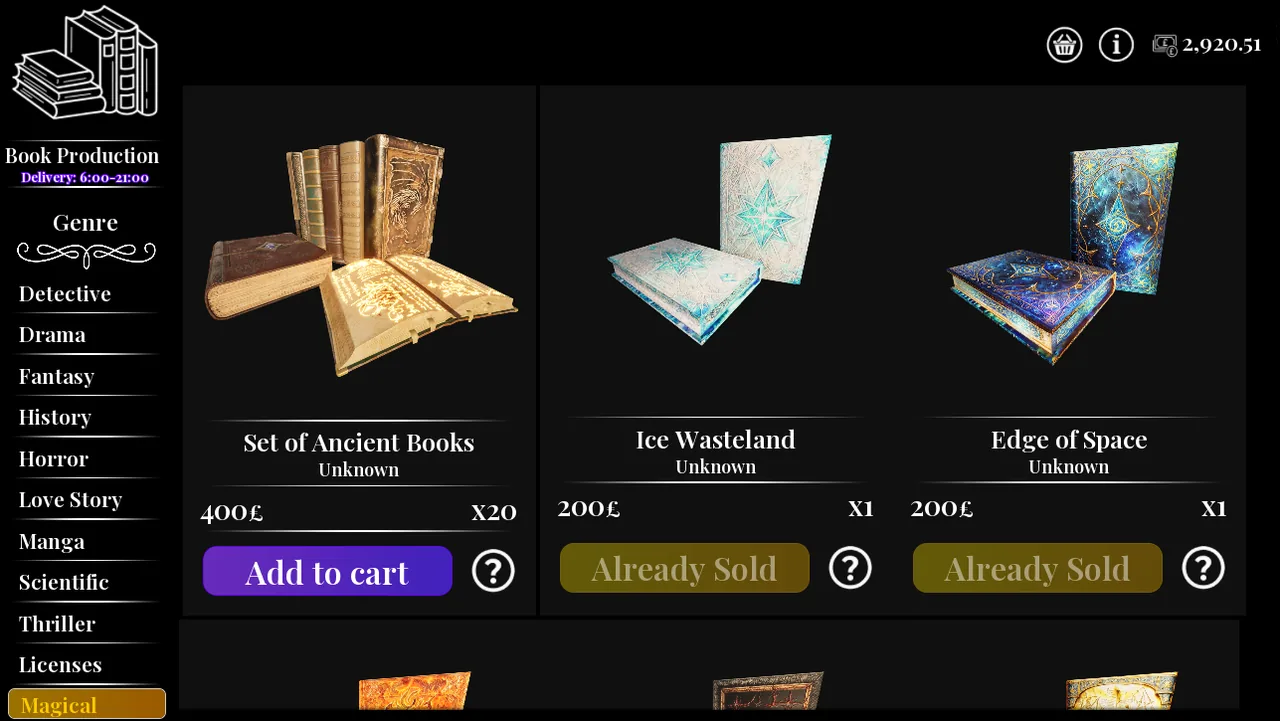
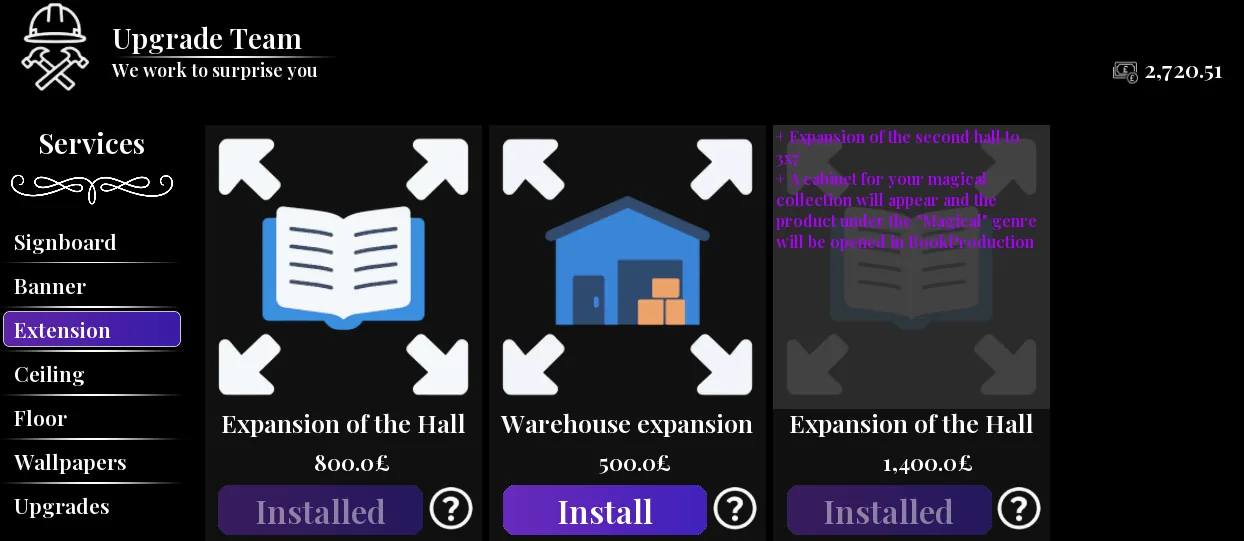
Magic is gated behind the first two hall expansions. Buy both and the Magical Books tab opens up.
Magical books are 400 for a box of 20 and need a magical bookshelf, which costs 320. Their prices are fixed: 20 to buy, 40 to sell. The interesting part is the customers. Magical customers are not affected by advertising at all — they arrive from other realms on their own schedule — which makes them steady, genuinely passive income. Build that base up and you can open further portals for more kinds of customer.
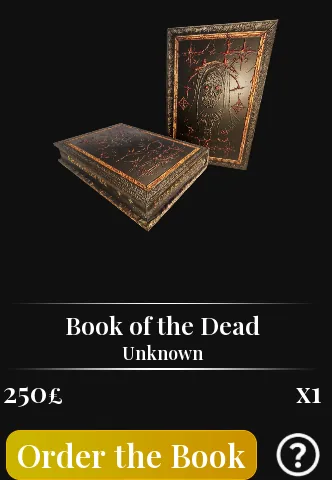
Personal magic books work differently. They are bought one at a time, and once purchased you have to go and collect them: search the city for a pillar of pink light, which marks where your extraplanar delivery hand is opening a portal. There are two places he appears. The common one is immediately to the right as you leave the store. The other is left, then right, where an alleyway opens off the right-hand side of the road.
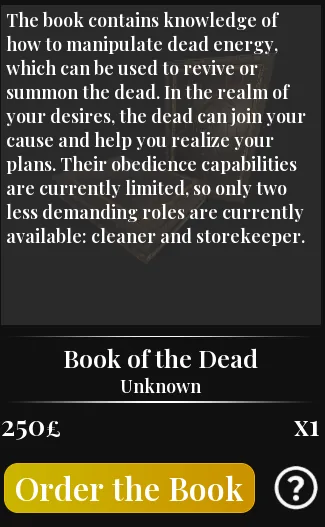
A personal magic bookshelf appears in your back room to hold them, since they are single use. One of these books is how you get the skeleton worker.

The magician’s gambit: magic before level 10
This is the fast route, for players who would rather not grind. It is a gamble, it needs both judgement and a little luck, and it front-loads a great deal of debt.
Play the opening normally up to level 5. Buy a sign, a bookshelf at 150, one box of each of the nine genres at 50 apiece for 450, and two days of the 300 advertising. You will be extremely busy, and you will clear level 5 before the end of day two — but let the advertising finish before you do anything else, because you will be interrupted by customers constantly while it runs.
Then close the store and take most of the loans, scaled to what you have made. The shopping list:
| Purchase | Cost |
|---|---|
| Hall expansion 1 | 800 |
| Hall expansion 2 | 1,400 |
| Magic bookshelf | 320 |
| Magic books | 400 |
| Two magic customer books | 400 |
| Book of Blessing | 200 |
| Two bookshelves | 300 |
| Total | 3,820 |
That comes to 367.50 in loan repayments every day. Keep buying advertising anyway — it is not optional here, it is what services the debt.
Remember the personal magic books can only be bought one at a time, because each one has to be collected from the delivery hand in person. Put the books from Blessing out at 175%.
From there the loop is simple and unforgiving: every day, buy a box of magic books and buy advertising. As you catch up, add another extraplanar customer whenever you can afford one. More customer types means more passive income, and passive income is what eventually pays the loans.
Expect the first five days to be tight — genuinely tight, coming out of the negative around midday, buying magic books the moment you clear 400, then spending whatever is left on advertising, then watching the loan repayment put you straight back under in the morning. By the fifth day of repayments, day seven overall, that stops. By the tenth, day twelve overall, four of the six loans are cleared and you should be sitting on one to two thousand consistently.
After that you can start expanding the ordinary genres into their own sections, at which point around 3,000 a day in sales is a reasonable expectation.